

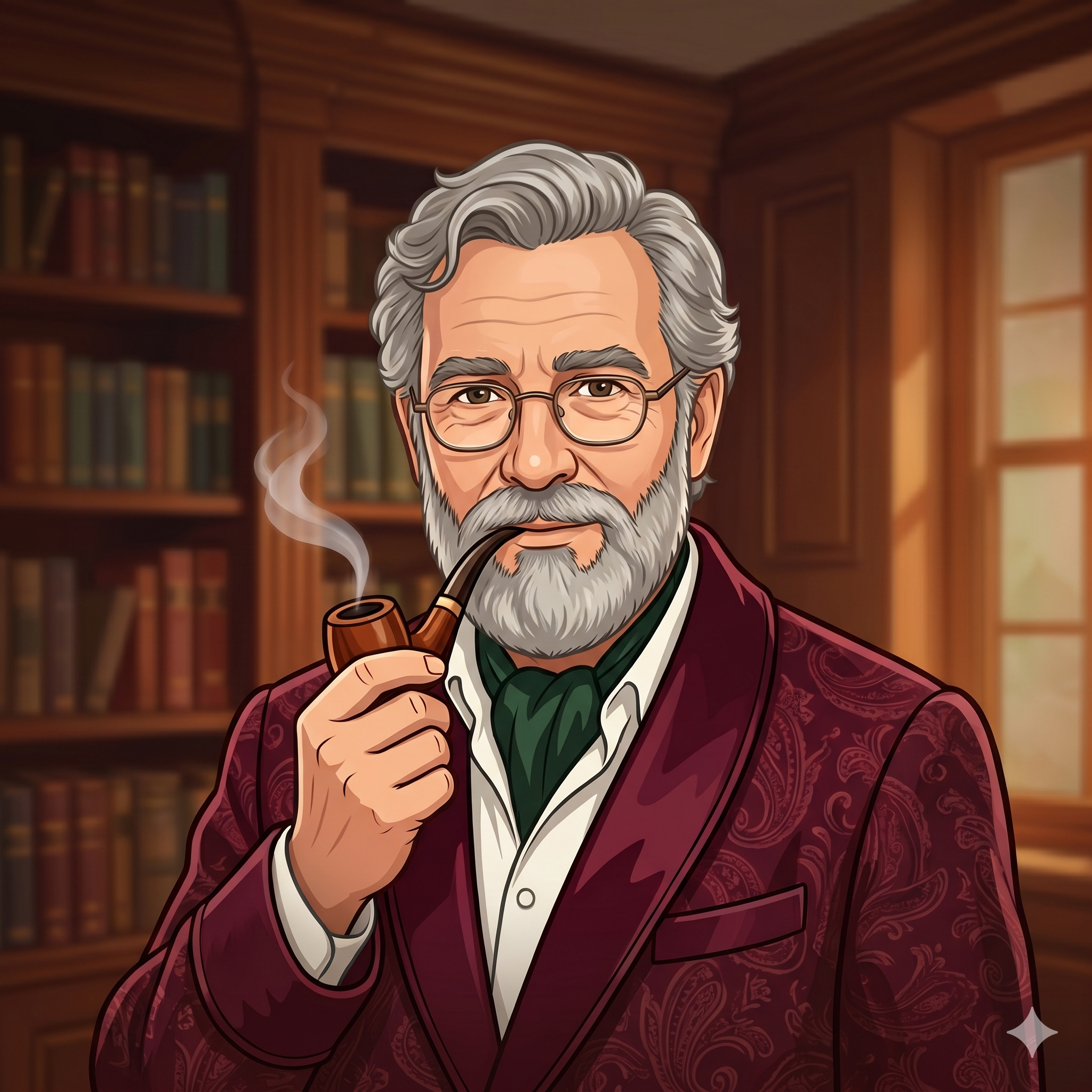
After Mr. McHughe adjourns his meeting, it’s clear word is spreading as to the capsule’s contents. I pride myself on staying out of the fray, but I imagine the barstools at that dreadful Riverside will be dotted with gossip hounds, tearing apart everything that’s been unearthed.
What’s not clear to me, at least right now, is why the time capsule was created in the first place.
Certainly, it was not a focal point – otherwise, how could it have been forgotten?
Given my long lineage on the banks of our delightful Chickotee, I must say, I probably have more interest than most in the contents of the time capsule. I approach Thornton, requesting early access to the report, and he allows it, inviting me straightaway to his office.
My driver pulls up to the outside of the historical society where Thornton is waiting to greet me. I jump out of the car and extend my hand.
“Albert Nutwell,” I say, sizing up this dapper, clothes-horse of a man. Clearly, he has a private tailor.
“Thornton McHughe,“ he says with a smile. “Mr. Nutwell, I must inquire, what is your motivation in requesting a private review?”
He opens the door for me and I step inside the society’s lobby. Non-descript as far as lobbies are concerned, rather like an elementary school or business office. On a budget, I suspect.
“Yes, the Nutwell family has conducted business at Hilltop very privately for many years,” I tell him. “I’d like to take stock in what you’re finding, though I realize most of it is already public, including the use of Hilltop as a link in the Underground Railroad to assist slaves moving northward.”
Hilltop still operates as a point of distribution for produce and products of various types throughout upstate New York and southward, I tell him, and we wouldn’t want to disclose private business dealings.
“My grandfather could afford anything he wanted, and privacy was at the top of that list. We’d like to keep it that way.“
Thornton nods, inviting me to sit down before him in his office. He hands me a document labeled “WORK IN PROGRESS.” Inside are fresh hand-written markups to be incorporated today by his typist.
I complete my review and hand the document back to Thornton.
“No notes,” I tell him. “What’s there makes sense. But before you issue it, I’d love to have you up to Hilltop for a visit.”
“I’d like to take you up on that,” Thornton replies. “When is a good time?”
We agree to reconnect in two days, and I step outside into the fresh air. Driver is waiting at the curb and opens the door for me.
“Good meeting, Sir?” he asks.
I nod. “Very good. Very informative.”
“Very good, Sir.”
We pull away, and I contemplate what to share with him. None of my public relations or communications staff need be involved. While I can’t say we have nothing to hide, I’m happy to show how slave runaways were hidden and fed, and how they were moved up to Hilltop after dark. I am certain Thornton has some knowledge of those who lived and worked there at the time.
Yes, we can’t share everything, nor do we want to. But we can share enough to keep any buzzards from getting too close. A quick visit through father’s files may be in order.
 Jenny Page